
Exploring Leadership Through HDO
Jeremi Suri, Betty Johnson, and Bex Vasquez bring a range of academic and professional perspectives to the study of leadership within the Human Dimensions of Organizations master’s program at The University of Texas at Austin. Suri, a distinguished historian and professor, leads the Approaches to Leadership course, while Johnson, a former Chevron technology manager, and Vasquez, a director at Dell Medical School, offer insights shaped by their industry experience and current work as HDO graduate students. Together, they reflect on how classic leadership frameworks, including Carl von Clausewitz’s On War, translate into modern organizational practice.
In Conversation: Leadership, Strategy, and On War
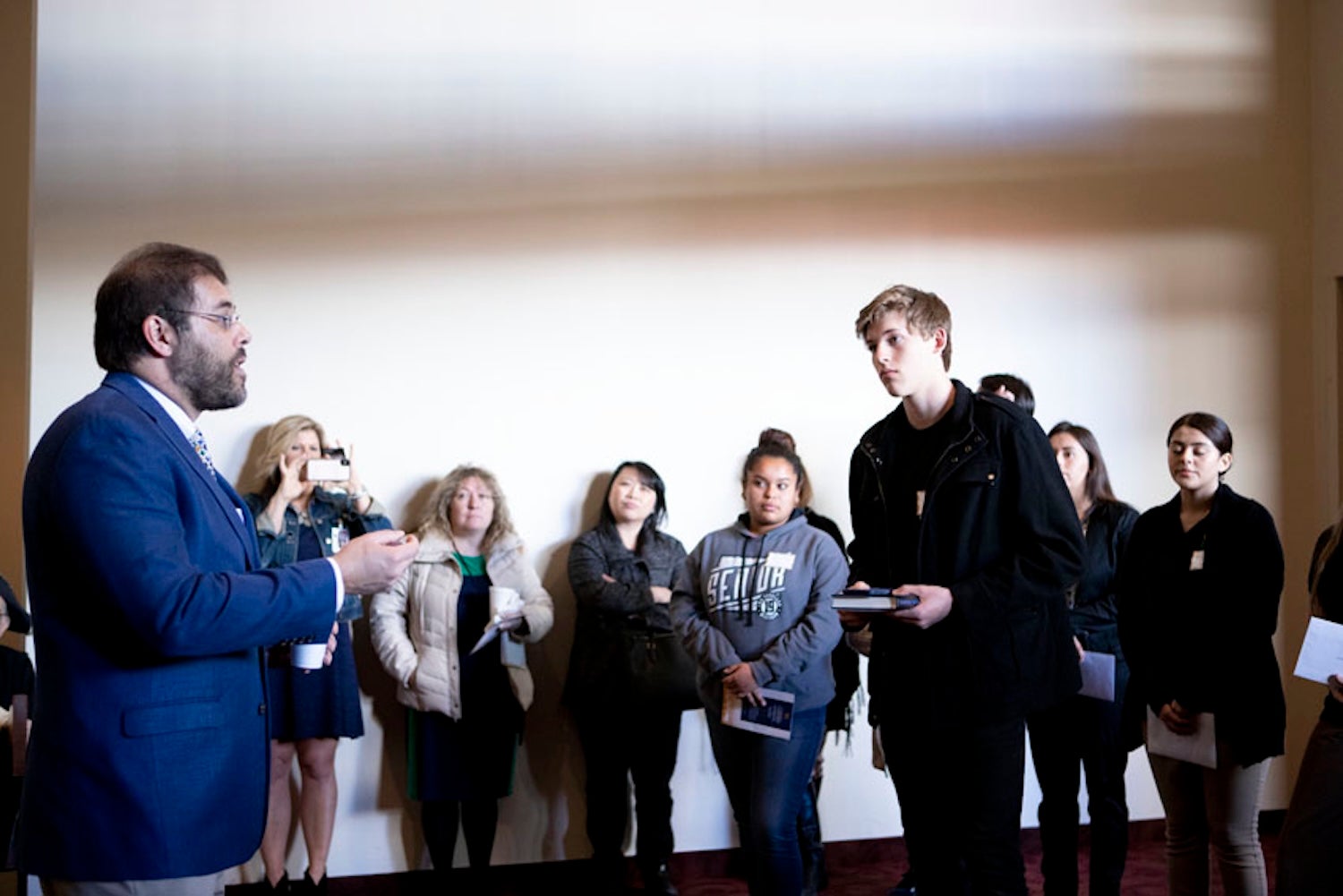
Moreau: A few Saturdays ago, I attended part of Dr. Jeremi Suri’s Approaches to Leadership course in the HDO master’s program. This class has stayed with me since my time as an HDO graduate student, largely because I remember seeing On War by Carl von Clausewitz on the syllabus and wondering why we were studying a military text.
In time, my key takeaway was this: Since both military and organizational leaders engage in strategic thinking, continually assessing internal and external factors to adapt to changing conditions is necessary. On War does not prescribe what organizational leaders should think; instead, it offers a framework for thinking critically about organizational effectiveness.
Below, two current master’s students and Dr. Suri share their perspectives.
Suri: On War is a classic text. Clausewitz explains what war really means, how to work through it, and how to avoid it. For Clausewitz, leadership is about ending wars on favorable terms. There is no victory or domination or utopia. He sees damage in all directions and the need for leaders to seek improvement, not perfection. “War is politics by other means” because everyone must compromise and everyone must give, even the mighty.
The leader must not fight to win in ways that defeat clear purpose. This is a common mistake that Clausewitz identifies. Strategic direction comes from a clear articulation of what matters and a pragmatic willingness to pursue different paths. We do not know how war will end, but it can only end with what Clausewitz calls the courage and determination to try new things, experiment with different maneuvers, and shed commitments for greater priorities. No one can have it all. Leaders must choose, and they must choose amidst resistance and limited resources.
Moreau: Now let’s get some insights from the HDO students. What are some of the things that you thought differently about after taking part in class discussion?
Johnson: Clausewitz is directly related to the workplace because—for better or worse—the military has influenced company organization and modern bureaucracy for centuries. Clausewitz fundamentally understood that bureaucracy gets things done, but it also has weaknesses: it doesn’t adapt, can’t handle disruptions, and won’t scale effectively. You need human imagination to adapt to realities. While modern workflows, big data, and AI can break down some barriers, new barriers are just as easily erected—just ask anyone who’s had to deal with a customer “service” phone tree! It’s important for leaders to keep their eye on the big picture. Procedures and details are important, but leaders should always focus on purpose.
Vasquez: While reading the book, it was interesting to see how the theory and then act of war can mirror the challenges we face in the workplace. It was in the discussion itself, led by Dr. Suri and heightened by the cohort participation, that made the proverbial lightbulb go off for me. I was struck with inspiration related to a current work challenge and suddenly I not only could see a way through the communication gap that I was experiencing, but I was able to talk through it in real time with Dr. Suri—using Clausewitz. When we replace armies and generals with workstreams and executives, we are really identifying obstacles, allies, current gaps, and potential outcomes, in an effort to determine which path to follow.
Moreau: Dr. Suri, Clausewitz explains that keys to leadership are recognizing what he calls “friction” and “fog” and then making strategic adjustments. Could you tell us a bit more about this?
“Friction,” Clausewitz writes, “is the only concept that more or less corresponds to the factors that distinguish real war from war on paper.” Leaders must expect friction, fog, and uncertainty in everything they do. They cannot assume it away by saying “if other things were equal.” They never are. Leading by formula or timetable or plan is how you lose a war fast. Real strategy, Clausewitz explains, is a continuing conversation about what we hope to achieve, what are the impediments, and how we can get through them, making compromises all along the way. The focus must be on the goals and discipline must come in making continuous adjustments and re-adjustments. Strategic thinking is never done. It is never static.
In this context, we cannot predict the future. We just don’t know how we will get to our destination, how long it will take, or what it will look like. We will always be surprised. Clausewitz reminds us that successful generals look around themselves carefully at all times; they are hungry to see the world as it is, and they know it will never be as they wish or expect. To analyze is to re-analyze; to lead is to think and re-think.
Leadership, then, is more of an art than a science. A practitioner must know a lot of things, but also recognize there is even more she does not know. Striving to learn more is striving to lead. Just as the painter or musician has a moment of clairvoyance after countless hours with a canvas or a piano, so a leader can see something unique and promising only after hours of thought, doubt, and analysis. Too often decisions are made to protect a prior decision, to cover sunk costs. (“We have lost so much, we cannot stop fighting.”) Real leadership comes from a decision that sees a new opening, direction, and opportunity. (“We have tried this for too long. I see another possibility.”) Clausewitz calls this “coup d’oeil,” the blink of an eye, when many divergent dots form a coherent pattern. Strategy is seeing the coherence in the chaos, the order in the mayhem. Wars end when a truly great leader devises a way out.
Vasquez: So often at work someone will bring forward a “strategic plan” that in reality is a tactical list of to-dos. Clausewitz showcases the need to know where you have come from, understand your current landscape, and have a plan for where you want to go. Having a plan can sound like the answer but, a plan is not enough. As leaders we must be able to observe, listen, be bold, and sometimes, even guess a little. As leaders, we owe it to our people and organizations to be willing to step outside of our own goals and objectives and see the big picture. The statement from On War that has stuck with me most is “The results of war are never final.” By taking action, we can set things in motion that were never built into our plan and are not always instant or predictable. When we work with humans, we have a responsibility to always check in, create safe spaces to learn and make mistakes because, while we can anticipate the potential, you can never guarantee what might come next.
Johnson: Clausewitz understood volatility, uncertainty, complexity, and ambiguity long before the U.S. Army War College coined the term “VUCA.” All leaders, not just those in the military, need to navigate through turbulence with an eye on the guiding purpose. We are constantly managing the dialectic, recognizing that two things can be true at the same time. The pace of change in the workplace today is unprecedented and unrelenting. The key is ongoing reflection, learning, and the construction of useful patterns to achieve the objective.
Moreau: What do you want anyone reading this blog article to know about studying Clausewitz?
Johnson: I found Clausewitz’s “paradoxical trinity” to be one of the most compelling and useful concepts. He maintains that “war” is controlled by three elements—human passion, political purpose, and chance. It’s ironic that shortly after reading One War, our class was using the concepts to discuss what was happening in Iran. The trinity framework can be applied literally or metaphorically to almost any organizational situation or strategic plan. While strategy is complex and nonlinear, Clausewitz’s trinity is a repeatable pattern for thinking like a leader.
Vasquez: On War should be required reading for every leader as we should build on his lessons. Clausewitz highlights the necessary work between bureaucracy and vision, which is even more powerful when combined with Michelle Obama’s hope, Adam Grant’s drive to think again, or Amy Edmondson’s guidance on building psychological safety in the workplace [all authors that part of the varied readings that are studied as part of the HDO curriculum]. Don’t be afraid of tackling On War. You never know what lessons will serve you in the future.
Suri: All of this is very simple, Clausewitz tells us, but “the simplest things are difficult.” That is the central lesson I want all leaders – in all fields – to take. We get lost in the noise, the emails, the meetings, the media, the politics, and the personalities. Leaders must take it all in, but find focus in pursuing clear, simple goals, with the courage to travel toward them in ways they never expected before. Leadership is an adventure of the mind and body where modesty and openness outperform stubbornness and self-assurance. Do the simple things well – looking and thinking and adjusting – and do them over and over again.
Victory is rarely possible. Improvement and progress are our goals. Clausewitz equips us to move forward. He does not promise any outcome, but he shows how we can all do better. That is what we are learning from one another. Come join this worthwhile adventure.
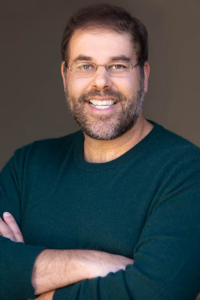 Jeremi Suri holds the Mack Brown Distinguished Chair for Leadership in Global Affairs at The University of Texas at Austin and is a professor in the Department of History, the LBJ School of Public Affairs, and Human Dimensions of Organizations.
He is a frequent public speaker and media commentator, and his teaching and writing have received numerous honors, including the President’s Associates Teaching Excellence Award. Suri hosts the podcast This is Democracy and writes the newsletter Democracy of Hope.
He is the author and editor of eleven books on politics and foreign policy, including Civil War by Other Means: America’s Long and Unfinished Fight for Democracy, with work featured in major outlets such as The New York Times, The Washington Post, and Foreign Affairs.
Betty Johnson is a retired Subsurface Technology Manager from Chevron, where she held roles in technical talent management, technology development, and exploration. She is a student in the Human Dimensions of Organizations Class of 2026. She is passionate about helping nonprofit organizations with strategic planning, volunteer engagement, and inspiring the next generation of leaders.
Bex Vasquez is the Director of the Operations Coordinating Group at Dell Medical School, where she leads a team focused on organizational alignment, governance, and operational excellence. She is part of the Human Dimensions of Organizations Class of 2026. She is passionate about helping teams to build an operational structure that allows for the flexibility necessary to navigate the organizational landscape, bringing the right resources to the right work at the right time.