
The Tragic Stakes of Leadership Transition
Imagine an 80-year-old founding CEO with three heirs. Two are Millennials and one is Gen-Z. He created his organization as a passion project and now wishes to step into an advisory mode. One of the Millennial heirs is ambitious and wants to grow the international profile of the organization; the other Millennial is driven and wants to diversify it locally; the Gen-Z heir wants to lean into the organization’s ethical mission and champion transparency and accountability. There are also two vice presidents, one former Gen X military and one a Boomer politician. There are two more Millennials in the C-Suite, each of whom thinks they know what is best for the organization and one of whom is determined to destroy it. How can they work together to honor the past, create a robust team, and ensure that the organization thrives in the future? If you have read William Shakespeare’s King Lear, you may recognize the scenario and think you know the answer. It does not end well. Only one of the Millennials survives, literally. No one else does. None of us wants this outcome.
I am often asked why someone with degrees from Berkeley, Oxford and Columbia in Comparative Literature, Theatre and Classics is so interested in strategic thinking, courageous conversations and team building. I answer that my training in the philosophy of tragedy and the human dimensions of organizations inspires me to avoid tragic outcomes and equips me to see dynamic and precarious scenarios like Lear’s as sandboxes for organizational optimization. Being the CEO of an international not-for-profit research organization for a decade, directing an academic unit at UT Austin for more than two decades, and teaching more than 12,000 students from first-semester undergraduates to supervising forty dissertations and sixteen HDO capstones over the past thirty plus years means that I had to figure our how to operationalize that theoretical training.
A New Kind of Workplace
Four hundred and fifty years ago, someone in their eighties working with someone in their late teens would have been a rarity. Today, for the first time in human history, we regularly have five generations in the workplace, especially in legacy industries and organizations like my own, higher education. With Alphas entering as interns already, and soon as coworkers, we will have six. The variations across generations can create moments of tension and even conflict, but fundamentally a strategic mindset sees such friction as a core resource to be curated not a problem to be solved. A strategic approach, which invites all stakeholders to bring their perspectives to the table, to advocate for their opinions, and to accept that their solutions may or may not be accepted on any given day, allows decision making to benefit from the best possible contributions of a variety of perspectives. Such agility has never been more essential than in our current change-intensive world.
In a scene from the cross-generational Hulu series Only Murders in the Building (2022), Jackie Hoffman’s Boomer character Uma Heller criticizes Selena Gomez’s Mabel Mora for being the kind of Millennial who thinks, when someone has been murdered, that it is still “all about you.” The core of the series, however, hinges upon the extraordinary sleuthing team of two older Boomers, Oliver Putnam (Martin Short) and Charles Haden Smith (Steve Martin), who team up with Mabel. Each of our organizations gets to decide whether we want to complain like Uma or collaborate like Oliver, Charles and Mabel. Of course, we are all individuals and where and how we grew up can be at least as defining as when we grew up. However, global events and patterns – recessions, pandemics, world wars, social media, climate change, the rise of AI – create the parameters for our lives. The age at which we encounter them also makes a difference. Grandparents defined by Great Depression and World War II, parents shaped by the Cold War and AIDS, and older siblings who remember where they were on the morning on 9/11 will see the world differently, have different levels of trust, and divergent senses of personal commitment. When in your life’s journey you were isolated during COVID may be the most defining factor for many of us in this moment – middle schooler unable to socialize with peers, undergraduate locked down in a pod at university, entry-level remote worker with their cat, or CEO on eternal Zoom meetings with partners they will never meet.
What forms our consciousness and what we bring to our workplaces is not only defined by grand narratives and crises, however. The everyday matters too. Did you grow up with a 24/7 news cycle? Is Reddit your source of information? Did you need to build your own technology or was it just a click away? What does a handwritten note mean to you? Is Facebook or Discord your go to? Boomers like Apple’s Steve Jobs and Xers like Google’s Sergey Brin and Larry Page built the fundamental pathways of our current online workplaces, and Zers are innovating in “Phigital” spaces that aspire seamlessly to integrate the physical and the digital. It is not entirely predictable who will be more digitally savvy. Any given individual will have unique personal habits in their lives and workplaces, but there will also be elements that are predictable. Millennials and Yers may be more comfortable programming and building their own online environments, whereas Zers may focus on self-expression and take instant ease of access through existing resources for granted.
Leveraging Generational Strengths
While not accounting for all individuals, some general generational tendencies include:
- The Silent Generation (1928-45): Dependable, straightforward, tactful, loyal
- Boomers (1946-64): Optimistic, competitive, workaholic, team-oriented
- Gen X (1965-80): Flexible, informal, skeptical, independent
- Millennials (1981-96): Competitive, civic- and open-minded, achievement-oriented
- Gen Z (1997-2009): Global, entrepreneurial, progressive, less focused
- Alphas (2010-2024): Global, digital, isolated, self-focused
As we think about how to optimize how our organizations tap into these human potentials, based on current research, we might consider the following:
- The Silent Generation (1928-45): meet face-to-face, use handwritten notes, respect their seniority, leverage their experience, show empathy, maintain impulse control
- Boomers (1946-64): bring assertiveness and problem-solving skills, leverage interpersonal skills and self-regard, come prepared for practical applications, openly value their opinion and experience
- Gen X (1965-80): bring emotional self-awareness, empathy and flexibility, listen to their perspective and leverage their organizational knowledge, empower and disperse them across the company
- Millennials (1981-96): embrace leadership and digital skills, welcome their courage and creativity, leverage their empathy, assertiveness, stress-tolerance and multinational perspectives
- Gen Z (1997-present): be transparent, focus on community, balance work/life, leverage their quick and eager learning curve, provide specific feedback
- Alphas (2010-2024): mentor, focus on authenticity, meaning and flexibility, leverage their creativity and tech savvy, enable varied perspectives
In order to undertake any change-embracing organizational initiatives, hypotheses are necessary about the potentials of existing colleagues, gaps in staffing resources, likely challenges faced and resources to be cultivated. Working with students in the HDO Executive Master’s program gives me direct access to the data I have been invoking here, as I learn about the current state of employee recruitment, training and retention in a wide range of industries from the public sector to the military, from education to high tech, from service to finance beyond those where I am myself active. The co-creation and co-learning ethos of the program meets the expectations I would advocate for any generationally inclusive workplace. We all bring our full selves to the table, carefully heeding Yoshino’s warning not excessively to “cover” our authentic selves by modulating are identities to conform to group norms (Yoshino, 2006). The Millennial and the Zer may have a more conflictual relationship, rather like an older and younger sibling, but in a strategic thinking configuration of a team that dialectic is productive. Equally the Silent Generation member of our organization may take more delight in the bravura of a Zer or an Alpha and may be able to professionalize the Zer and Alpha with less animus than a Xer manager might trigger. As much as younger generations may seek quick automated answers, their skepticism and desire for authenticity may align them with their elders in calling out more transactional and efficiency-oriented impulses from Xers and Yers.
Emotional Intelligence and Radical Candor
Perhaps the phrase is too expected, but emotional intelligence is key, along with what Scott (2024) has called “radical candor” – saying what you think while caring about what another person thinks. Caring about what another person thinks entails asking about and finding out who they are. Since we all “cover,” paying attention to what cannot be covered, like with which generation we identify, managing something we always know about our coworkers without intruding or conjecturing too far is an opportunity not to be missed. When Lear asks his youngest daughter, Cordelia, whether she loves him and would like to be CEO, and she says she loves him only as much as she must, he should have recognized her Zer love language where impassivity invites empathy rather than rejection.
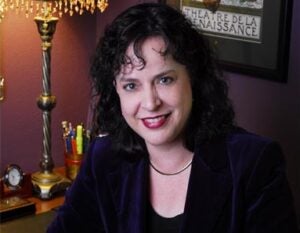 A UT Regents’ and Distinguished Teaching Associate Professor of English, Elizabeth Richmond-Garza is a leading authority on human-centered teaching and one of UT Austin’s most decorated educators. She brings unparalleled expertise in fostering the skills critical for individual and team success.
She teaches belongingness through literature and the fine arts and works actively in eight world languages. Richmond-Garza’s multimedia approach to teaching has been honored by a dozen teaching awards at UT Austin and across Texas. Previously, she served as the Director of UT’s Program in Comparative Literature and as chief administrative officer of the American Comparative Literature Association. She is affiliated faculty in the Center for Russian, East European, and Eurasian Studies, and the Program in the Human Dimensions of Organizations. She has held both Mellon and Fulbright Fellowships.
Her expertise includes empathetic leadership, team building, effective communication, courageous conversations, strategic thinking and organizational culture change. Her ability to optimize group performance and cultivate collaboration has made her a sought-after consultant for organizations ranging from agile startups to global corporations.